What to Expect at Your First Salsa Class (and How Not to Be Nervous)
Walking into a dance studio for the first time is an act of vulnerability. It involves stepping out of your professional and personal comfort zones – and into a space where you are a complete novice.
However, here is the truth that every seasoned dancer knows: The hardest step in salsa is not the “Cross-Body Lead” or the “Right Turn.”
The hardest step is the one you take through the studio’s front door.
This guide is designed to be your roadmap to your first salsa lessons for adults. We will walk through exactly what happens during that first hour, what you need to bring, and, most importantly, how to silence that inner critic so you can actually enjoy the music.
What Are the “First Class” Jitters?
Before we discuss shoes or timing, we must address the mental game. Why is a simple dance class so nerve-wracking?
Psychologists call it the “spotlight effect.” It is the phenomenon in which we believe we are being noticed and observed far more than we actually are. When you walk onto the dance floor, you might feel like a spotlight is tracking your every error. You imagine that if you miss a step, the entire room will stop and stare.
In reality, a beginner dance class is the safest place on earth to make mistakes.
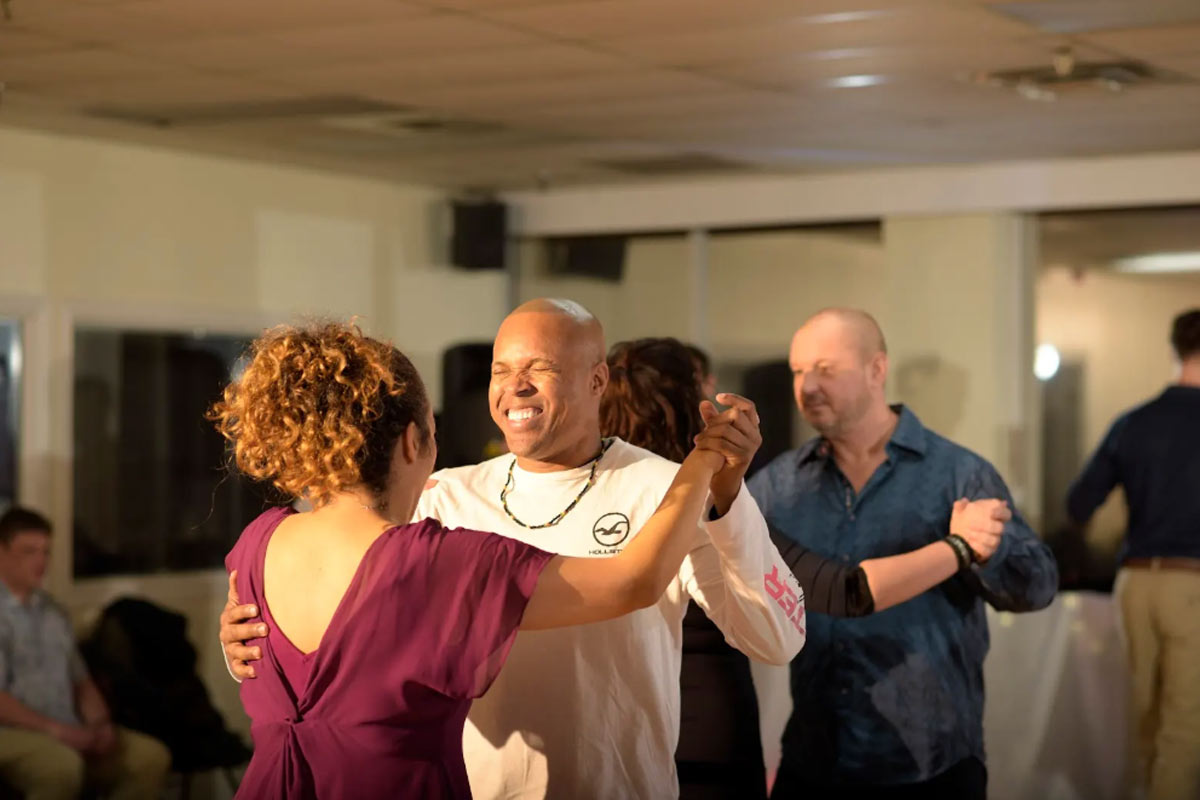
Everyone in a Level 1 class is in the same boat. The person to your left is desperately trying to remember which foot is their left; the person to your right is worried about their sweaty palms. The instructor is focused on the group as a whole. No one has the mental bandwidth to judge your hip motion because they are too busy hyper-focusing on their own feet.
If you can accept that no one is watching you, the fear evaporates.
Remember, every professional instructor and every smooth dancer you admire started exactly where you are: standing awkwardly in a room, wondering what to do with their hands.
Preparation: The Logistics
One of the biggest sources of anxiety is the fear of the unknown. What do I wear? Do I need a partner? What if I smell? Let’s clear up the logistics so you can arrive prepared.
- What to Wear (No Sequins Required)
A common misconception is that you need “Dancing with the Stars” attire for your first lesson. Please, leave the rhinestones and spandex at home.
- Clothing. The goal is comfort and mobility. Salsa is a surprising workout; you will get warm. Wear breathable fabrics. For men, slacks or jeans with a t-shirt or button-down are standard. For women, leggings, jeans, or a comfortable skirt are perfect. If you wear a skirt, ensure it allows you to take long steps backward without restriction.
- Footwear. This is critical. You do not need to buy professional dance shoes for your first month. However, you must choose the right street shoes.
○ Avoid: Heavy work boots, flip-flops, or running shoes with high-traction “grippy” rubber soles. Salsa requires you to pivot on the ball of your foot. If your shoe grips the floor too tightly, your foot will stick while your knee turns, which can lead to injury.
○ Choose: Dress shoes with a smooth leather sole. You want a little bit of “slip” to help you spin.
- The Hygiene Factor
Salsa is a contact sport. You will be in close proximity to other humans. Good hygiene is not just polite – it is essential dance etiquette.
- Deodorant: Apply it fresh before you leave the house. Keep in mind that some people may be allergic to deodorants or perfumes.
- Mints: Keep a pack of breath mints or gum in your pocket. (I am not sure about “Mints or gum,” as during the dance, a dancer could potentially choke on them.) Maybe better “a mouth freshener- like sprays” or mouthwash)
- Change of clothes. Bring 1–2 clean T-shirts to your class, practice, or Salsa Club (a quick change can save your confidence). Everyone sweats differently, and fresh clothes help you feel comfortable, smell good, be pleasant to others, and stay focused on dancing.
- The Partner Myth
“I don’t have anyone to go with.” This is the number one excuse for not taking lessons.
- Reality: You do not need a partner. In fact, going alone is often better. Our ballroom dance classes in Toronto and North York, specifically those with a social focus like Salsa, operate on a “rotation” system. The instructor will line everyone up and pair them off. Every few minutes, the teacher will yell “Rotate!” or “Change your partner!” and everyone moves to the next partner.
Rotation is the secret weapon of learning. It prevents you from compensating for a partner’s mistakes (or them compensating for yours), and it forces you to learn the technique rather than just memorizing how one specific person feels. Plus, it is a fantastic icebreaker.
By the end of the hour, you will have high-fived everyone in the room.
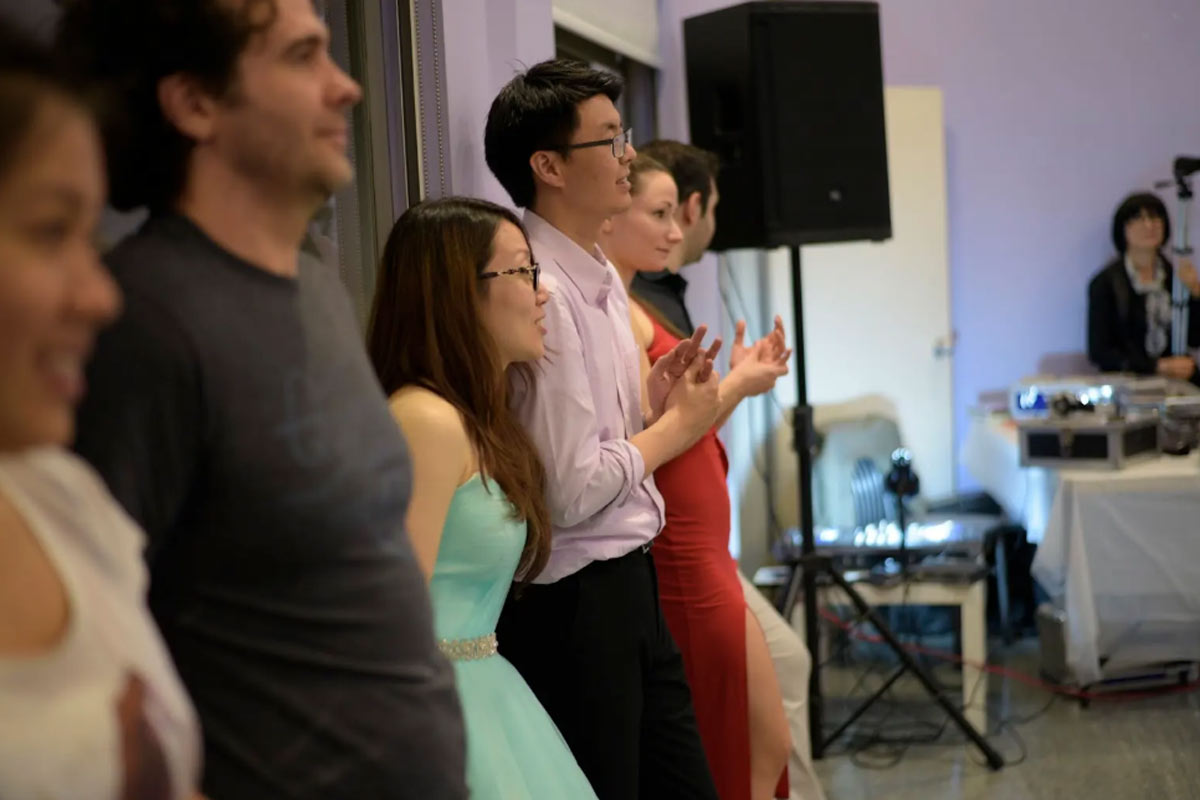
Knowing the class structure removes the surprise. While every studio is different, a standard beginner salsa class follows a predictable arc.
Phase 1: The Warm-Up and Isolations
The class usually begins with everyone facing the mirror, standing in rows. The instructor will put on a song and lead you through a warm-up. This isn’t just calisthenics. It is usually “isolation.” You will move just your head, then just your shoulders, then your ribcage, and finally your hips.
- What to expect: You might feel stiff. You might feel like a robot trying to oil its gears. This is normal. The goal isn’t to look like Shakira or Marc Anthony on day one. The goal is to wake up the muscles that connect your spine to your hips.
Phase 2: The “Shines” (Footwork)
Before you touch another person, you must learn to support your own weight. Solo footwork in salsa is called “shines.” The instructor will stand at the front (facing the mirror) and demonstrate the basic step. You will follow along.
- The basic step: Usually, this involves stepping forward with the left foot, stepping in place with the right, and bringing the left foot back to center. Then, stepping back with the right, stepping in place with the left, and bringing the right foot back to center.
- The count: This is the heartbeat of the dance. Salsa is danced to an 8-count beat, but we only step on 6 of those beats. The count is 1, 2, 3… (pause)… 5, 6, 7… (pause). ● The pause: That pause on counts 4 and 8 is not a stop. It is a “slow” moment where the hip settles. Don’t worry about the hip action yet – just focus on the rhythm.
Phase 3: Partnering Up
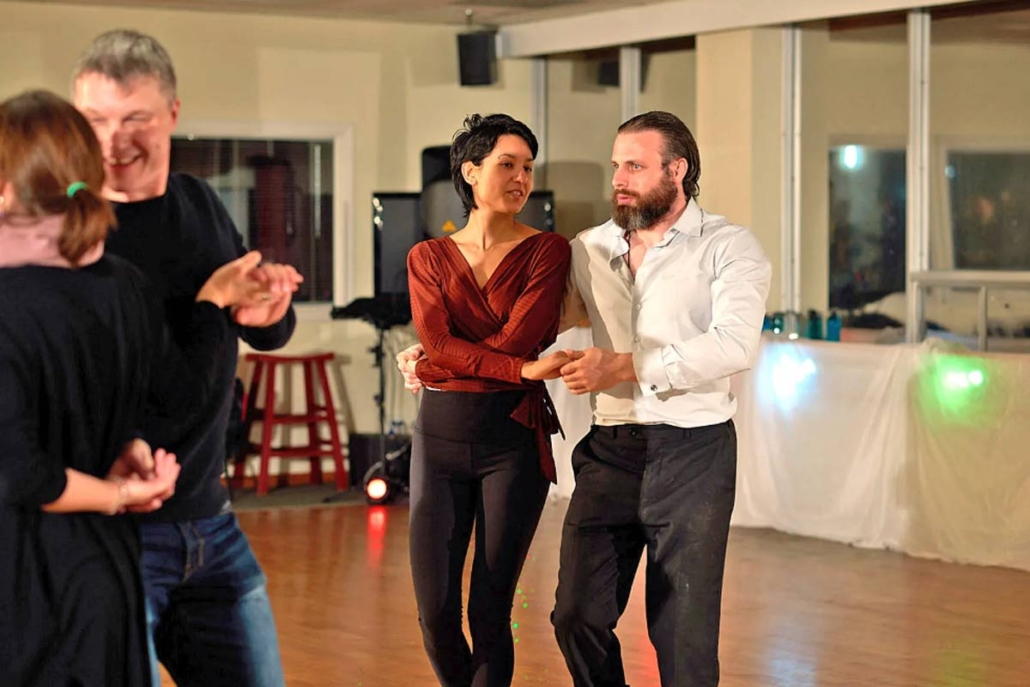
After warm-up, the instructor will ask the “Leaders” (traditionally men, though anyone can lead) and “Followers” (traditionally women, though anyone can follow) to pair up. You will form a circle or lines. The instructor will demonstrate how to hold your partner (the “Frame”).
Usually, we start with two hands held. It is a very forgiving connection that gives dancers space to maneuver and make mistakes without stepping on each other’s feet. The key here is tension. You don’t want “spaghetti arms” (too limp to feel a signal) or “stiff arms” (too rigid). You want a firm, elastic connection.
Phase 4: The Move of the Day
Once you have completed the basic step with a partner, the teacher will introduce a single movement. In a first class, this is usually the “Right Turn” or the “Cross-Body Lead” (where the leader and follower swap places).
- The Rotation: You will try the move a few times, and then… “Rotate!” You switch partners and try again. This repetition builds muscle memory faster than you realize.
https://drive.google.com/file/d/1Yhnqa_r_EPBxCEkGE-zndWzG08ICOJbW/view?usp=sharing
Common Rookie Mistakes (And How to Laugh at Them)
You will mess up. It is inevitable. But if you know the common pitfalls, you can correct them faster – and forgive yourself easier.
- The “Sorry” Loop
Beginners often apologize after every misstep.
You step on a toe. “Sorry!”
You miss a hand. “Sorry!”
You turn left instead of right: “So sorry!”
Stop it. If you apologize for 60 minutes, you will drain your energy. A quick smile and a “whoops” is all that is needed. Everyone is learning – mistakes are the curriculum.
- The Floor Gaze
When we are nervous or thinking hard, we look down. We look at our partner’s feet to ensure we don’t step on them.
The problem: Human heads are heavy. When you look down, your spine curves, your balance shifts forward, and you feel heavier when leading or following.
Additionally, the social aspect is important; it’s not enjoyable for your partner to just stare at the top of your head.
Look at your partner’s chin or shoulder. Trust that your feet are still attached to your legs. If you look up, your balance will instantly improve.
- Back-Leading (For Followers)
Followers often try to be helpful by anticipating the move. If the teacher says “Right Turn,” the follower might turn themselves before the leader actually signals it.
The fix? Wait. Salsa is a conversation. If the leader hasn’t “invited you” (signalled the turn), don’t do the move. It’s an exercise in patience and trust.
Ready to Start?
If you are ready to trade your anxiety for excitement, Dancingland Dance Studio is here to guide you. We specialize in making beginners feel at home from the moment they walk through the door for our ballroom dance classes in Toronto and North York.
We are so confident that you will love the experience that we have a special offer for new students.
Call us today at 416-358-5595 to book a complimentary 45-minute tryout private lesson for beginners.